Three trends for digital in 2015 (2017 update!)

This week we reflect back on the year in digital and look ahead to three trends for digital in 2015.

It’s that time of year again when us agency folk are speculating about what brands will be looking at next year. So, (not breaking with tradition) I thought I’d follow the trend and write my latest post on my predictions on trends for digital in 2015. I also thought I’d demystify why we do this every year.

Firstly, we want to tell you what we’ve got in mind for the next 12 months. Although, as DVO’s clients will know, forward thinking in digital should be a central part of any strategically-led full service digital agency proposition. In fact it’s crucial to be evaluating new developments, technology and platforms as they arise, and making smart decisions about how or even if they have relevance to the brand’s goals and customers. There is also a bit of shameful steering going on. These are uncertain times, and if I tell you that the three things you should be focusing on are X, Y and Z, then you may well believe me.

With that in mind, here are my top three things to concentrate on in 2015:Continue reading

Agency and marketing terminology (or how to get 20 points in bulls**t bingo)

We marketers love inventing new marketing terminology, sometimes using the same term for a multitude of meanings. Our handy guide helps you know what’s what.

There’s a lot of interchangeable marketing terminology so this week I’ve collated some of the most popular into a handy little explainer. These are some of the most popular you’ll hear at work, in the pub, at networking events or when playing b*llshit bingo so that next time you can avoid omni when you should be multi.

Content Marketing

The production and distribution of digital content to engage with an audience that doesn’t directly promote a single product or service but provokes interest and elicits a desirable response from the reader.

Some argue that Content Marketing isn’t a standalone discipline and that marketers have been producing and distributing content for customer engagement since year dot. I’ll not fan the flames of that argument here, but just say that Content Marketing has become such a big topic in the marketing horizon, it’s a good idea to understand what it is.

Integrated Marketing

Integrated marketing is a discipline that works towards bringing together different strains of marketing around a coherent, consistent voice to enhance and amplify each to create wider engagement. So an example might be a brand ensuring the messaging and visual it uses in its TV advertising is reciprocated in in-store promotional material and on social media.

Multi-channel

Creating either tactical campaign-based or always-on marketing activity that is simultaneously distributed across a number of different marketing channels appropriate to the offer and the audience. As more and more channels get added, this becomes more complicated, particularly in organisations with very siloed departments.

Warning! This is one of the marketing terminology red herrings. Multi-channel is confused with omni-channel on a regular basis. You’re probably working in a multi-channel organisation. A good way to know for sure is if you work in digital how many people do you know in the brand team, if the answer is none then you’re definitely a multi-channel organisation.

Omni-channel

Similar to multi-channel marketing, but rather than all the channels operating independently, omni-channel marketing brings them all together to work holistically to produce a properly integrated marketing campaign. Omni-channel is much more customer-focused and ultimately more effective, we’re big omni fans. Read more about multi- vs. omni- channel marketing here https://dvoagency.co.uk/multi-channel-marketing-problems-and-opportunities/.

SEO

Simply put, Search Engine Optimisation. So any activity you do on your website with the aim of improving your site’s visibility and organic ranking with search engines (primarily Google). Many people mistakenly believe this is a one-time exercise to be done when a site is built or a product launched, but SEO should be an ongoing part of your mix, supporting all activity, both on and offline.

Customer Experience

A bit of an easy one this. Literally, your customer’s experience. What they experience when interacting with your business, at any and all touch points. This is ideally always positive, but invariably hits the odd bump in the road, and elements can often be out of your control. Not to be confused with User Experience (or UX).

User Experience (UX)

Hot topic/buzz word right now, and as usual, so-called ‘specialists’ have suddenly popped into existence to meet demand (or exploit invented opportunities?).

User Experience refers to the overall experience a visitor has when visiting your website or using a web-based application. So, how easy it is to find what they need, to move through the space, identify the required route and achieve the desired result. Not to be confused with Customer Journey.

Customer Journey

How a customer moves into, around and through any and all touchpoints with your brand or business. Online, offline, below the line, through the line, too far over the line, all of them! Often something that a business thinks is simple and straight forward but when they actually sit down and map it all out (we favour a massive white board and lots of different coloured pens. But we’re old school like that) it’s a lot bigger and far more complex than they ever imagined. Spend time early on understanding the customer journey and you’ll save yourself a massive headache down the line. Some people (ahem, DVO) are staunch advocates of the customer journey and can get quite emotional when people disrespect it.

Brand Experience

A bit more touchy-feely this one. Brand experience is the emotional, behavioural and sensory responses a customer experiences when exposed to your brand. Hard to control obviously, but with good planning, thorough research and good customer understanding, you can build a brand that meets your customers’ needs to put yourself in the best positon to evoke wholly positive responses.

Jimi Hendrix Experience

One of the most popular rock bands of the mid Sixties, led by the legendary Jimi Hendrix. Arguably the most successful trans-Atlantic act of the time, they produced three studio albums and anyone that can hear “Foxy Lady” and resist doing the ‘Wayne’s World dance” has no soul.

Strategy

A defined plan of action designed to achieve a predetermined goal or set of objectives. Often different departments will have their own specific strategies, which should all work towards supporting the overall business strategy. In marketing, there are often then discipline, sub-department and sometimes even tactical or campaign specific strategies in place. But again, these should all be based on how they can assist in meeting the business objectives. Often though, they aren’t and are entirely random.

KPIs

Key Performance Indicators. These are measurable outcomes to activity that can be collated and reported against to demonstrate whether that activity is meeting the business objectives. These can be quantitative, qualitative or anecdotal. But they must be agreed and in place from the outset. Too often we see companies struggling to assign KPIs halfway through a campaign or trying to change the KPI as it wasn’t fit for purpose, usually through lack of planning. Don’t be these people.

Goals

The terms Goals and Objectives are often used interchangeably, but are actually slightly different. The easiest way I can explain it is a goal is something you want to get, an objective is somewhere you want to be. Goals bring glory, objectives bring results. Both good, both needed, but inherently different.

If you’d like to wax lyrical about some of the terms mentioned, or more importantly you’d like some no-nonsense advice on your next strategic step, give us a call.

Contact us

What is lean full service?

This week we’re talking about lean full service and why it’s the perfect agency set-up for our modern connected world.

I’ve blogged a lot recently about integrated, multi-channel and content marketing. All integral parts of DVO but it struck me that we should be talking more about lean full service. As a full service digital agency it’s central to our approach to our work, it’s why we created the agency in the first place and it’s the antidote to the traditional agency model.

Where have we come from.

It’s worth us talking about the agencies of the past. It’ll put everything in context later on in this post.

Back in the day when one way advertising ruled the roost the ad agency was primarily made up of creatives and client service folk. Going about their lives doing advertising. Women were in the minority, suits were sharp and martinis were sharper.

This period in the history of agency development is truly fascinating, for some further reading check out:
https://medium.com/comms-planning/a-brief-history-of-comms-planning-df94a56958fe#.glwlzw2dw

Image curtesy of accountplanning.blogspot.co.uk

Then a bright spark (the chap above, Stephen King, was a pioneer) thought that introducing social sciences into the mix could help make the advertising more effective. Planning was born and little has changed since then. Sure, we’ve added lots of new channels, technology has come along, but the core principles of starting with planning and strategic thinking to positively influence the creative process and the outcome of the campaign remain pretty much the same.

Some more further reading, http://accountplanning.blogspot.co.uk/2014/11/founding-fathers-stephen-king.html

Stanley Pollitt advocated the use of data and removed discretionary control from account management with planning working alongside client services through the all important briefing process. Or paper shuffling as we like to call it.

So has this rigorous approach changed?

Well as we increasingly added more and more channels into the mix, there began a rush to specialise. First media buying was hived off, then direct and latterly digital. Digital got broken up into various channels; media, SEO, social. Some agencies started doing creative, some more marketing focused work.

Then technology got stuck in, automation became the key, every software solution promised optimisation of a specific channel or strategy (don’t get me started on the “s” word).

In a word it seems that the overarching rigour that once existed has become increasingly less important.

What got lost in all of this?

Strategic direction. Strategy has become an overused word to the point of ridiculousness. It seems in our immediacy culture that the intellectual rigour that formed the hallmark of some outstanding work has been sacrificed for a ‘suck it and see’ approach. Taking the time to look at the big picture seems less and less important. This increasingly illogical solution to a problem or challenge that is becoming more complex is counter intuitive at best.

Making sense of a more complex customer journey and making the right decisions creatively, with technology and importantly strategically seem more chance-based than they ever were before. Sure, tactically we have more data at our disposal and it’s easier than ever to figure out when, where and how to interact with a consumer but this so often manifests in a silo mentaility, without connecting the dots. It makes delivering the uniformly excellent customer experience harder and harder.

Which seems odd when you take into account the prevailing research:

“Customer experience is the last source of sustainable differentiation and the new competitive battleground.” Tiffani Bova, Vice President and Distinguished Analyst

67% of consumers site bad experiences as a reason for churn.

Research shows that 55% of consumers are willing to pay more for a guaranteed good experience.

So how does lean full service solve this problem.

To us it seems obvious that the challenge brands really need help with is a strategic one. It emphasises the “long idea”, use of technology that improves the customer experience and strategy more attuned to consumer behaviour.

Lean full service was the philosophy we created as the basis of DVO. It’s the culmination of our experience as a founding team that spans 50+ years agency and 30+ years client side. It’s what we’ve built our entire agency model around and we’ve done it because it answers all the questions we’ve been asked by our clients, brands we’ve met and collaborators we’ve worked with. Lean full service allows for an agile, project based approach to activation but makes room for rigorous planning, strategy and ideas.

Lean full service is about control, control to shape strategy, control over the long ideas that work cross-channel and control of the big technology choices that shape customer experience.

We believe that in the connected world, with so many channels at a brands disposal, that the only way to cope and thrive is to step above channels and work agnostically to avoid getting bogged down. Strategic thinking should be about the whole, focusing holistically on the overall customer experience. Brands must avoid the urge to jump on the next fad and prioritise making smart decisions that are based on data, insights and importantly how they will impact this overall experience.

This holds equally true for the idea and the technology. Divorcing this from specific channels makes it much easier to create a holistic ecosystem of digital experiences and communications. The long idea and overarching strategy are designed to work across a range of channels, nuanced to the needs of the consumer at each touch point with technology working in the same way. Only with this truly consistent voice will brands be able to tap into the competitive advantage that a differentiated experience can afford them.

But we’ve not mentioned production and activation. Well, in a lean full service agency you still get an end to end solution through to activation, but we’re only hands on with certain media (predominantly owned) and integral production elements such as integrated design and development. The rest is done through collaborators and technology. Why? Because the depth and breadth of talent and the capabilities of software are now so immense it’s impossible for it all to be optimised in-house. Agencies talk about talent problems all the time, so why fight it? We work with the best video producers, design specialists and channel and sector specialist creatives who help to bring our ideas to life. We work with programmatic ad buying platforms that cover display, social and native and and we’re proud of it. Our technology stack covers user generated content, analysis and publishing. We do all of this because it’s what we believe a modern agency should look like, clients are buying into our expertise not our ability to charge large management fees for software to do most of the work.

We started DVO with a tick box of things we knew people hated about agencies, because we’d hated them when we were client side:

  • Bloated retainers
  • Jack of all trades mentality
  • Poor collaborations
  • Lack of insight just relying on data
  • Lack of data just relying on insight
  • Lack of access to senior people
  • Seniors being around at the pitch stage and the intern doing the work
  • Channels fighting against each other
  • Little to no process to help manage change
  • The client is often seen as part of the problem, not the solution

It was a big list of challenges but our solution was lean full service to get back on the right path and bring clients back to a place where they valued the agency once again.

A lean full service agency looks like this:

Senior team members lead client projects from the front, very often starting projects in a consulting capacity to intimately understand the entire organisation, culture and challenges. That’s important because in todays world truly putting the customer at the heart of the brand isn’t just about marketing.

  • Leadership is key, whether it’s strategic leadership, creative or technology. In lean full service the emphasis is on experts working hand in hand with the clients on a daily basis
  • In lean full service we don’t try to be all things to all people, we’ve got a roster of carefully selected collaborators who we can bring in at the precise point their expertise is needed. This ensures you get the best possible team, at the right time, for the right task
  • To build the best strategy requires a blend of data and trends, the big and small picture. Ultimately the best insights are the result of asking the right questions to make a fundamental difference
  • Content and digital experiences unite channels. Lean full service slots in nicely above channels with agnostic ideas that actively work to integrate and unite campaigns, content and conversations around a singular voice
  • Project based no bloated retainers
  • The ability to bring a rigorous approach to agile activations
  • Sourcing and evaluating expertise and technology is a core discipline within the agency
  • The client is a part of the solution

We created lean full service because we recognised that marketers were falling out of love with agencies and it’s easy to understand why. So rather than jumping on the band wagon bound for a slow death, we thought we’d do something about it.

Lean full service is equally at home with legacy brands looking to become more digitally integrated and evolve closer to the reality of todays consumer as it is with challengers and disruptors seeking the kind of agile approach that is the hall mark of their marketing.

If you’d like to talk to us about how lean full service can help you through this time of constant change, building the kind of customer experiences that will foster loyal customers, then do something old school. Pick up the phone, give us a call, we’ve got nice biscuits and we can help.

Contact us

Multi-channel marketing problems and opportunities

By popular demand from our recent Twitter poll, this week we dive into multi-channel marketing problems and opportunities.

Multi-channel marketing problems and opportunities seemingly exist in equal measure. We seem to be living through the conclusion of multi-channel with brands bursting at the seams under the weight of all the new channels that technology has created.

So, to help clarify things, in this post we’ll cover:

  • What multi-channel actually means and how it is different to omni-channel?
  • The downside of multi-channel
  • The solution
  • Conclusion

What is multi-channel and how is it different to omni-channel?

First off, let’s clear something up because these terms seem to be very similar but, as you’ll see, the strategies are very different and the terms seem to cause endless confusion. So, what is the difference between multi-channel and omni-channel?

Multi-channel marketing

The multi-channel approach aims to get the word out using as many channels as possible, usually more than 2. Rarely are the channels connected and working together in an integrated way. Organisations invariably find themselves operating a multi-channel model, having added new channels as and when they become available. Lots of work for lower quality output and poorer results.

Omni-channel marketing

The Omni-channel approach integrates every channel to engage with customers as a holistic whole, rather than treating the channels as discreet siloes. An omni-channel approach taps directly into the cornerstones of integrated marketing; coherence, consistency, continuity and complimentary. Omni-channel prioritises the overall experience as the sum of interactions with the brand through each and every channel aiming to ensure these are overwhelmingly positive. Omni-channel is a truly customer-first approach, building stronger relationships between consumers and brands by better meeting needs at every stage.

Check out our recent blog on integrated marketing here, discussing the fundamentals of an integrated campaign which would be delivered within an omni-channel strategy.

Brands with a defined omni-channel marketing strategy achieve on average a 91% higher year-on-year increase in acquisition and importantly, customer retention.

So, what’s wrong with multi-channel?

It’s not that there is anything intrinsically wrong with multi-channel it’s just not an approach that optimises either the activity or the individual channels themselves. As marketers, we should always be collectively striving to improve what we do and how we are doing it. As the consumer has matured with technology, we now understand more than ever the connected nature of marketing channels. The immediacy culture that technology has created and the huge change in customer behaviour resulted in many brands struggling to keep up. Multi-channel seems like a place we have arrived at at the end of a race to add as many channels as possible, testing, learning as we go (sometimes!). Smart brands in this place are now looking to see how they can connect the channels and offer a better, more connected, experience for the customer. Why? Because it results in improvements from awareness to acquisition through to retention.

I promised myself I wouldn’t bang on about siloes again so all I will say is that the pinacle of multi-channel is usually a whole host of siloes in marketing, at worst working against each other with arbitrarily assigned KPIs that bear little relation to the whole. Which is not a place anyone wants to be in. We see our role as a full service digital agency to integrate these around a holistic view of the customer, to get a better return on investment for our clients and a better experience for their customers.

The real danger of multi-channel is an unwillingness to connect the channels, that comes down to organisation and culture. But to be honest without the appetite to change innovation is unlikely.
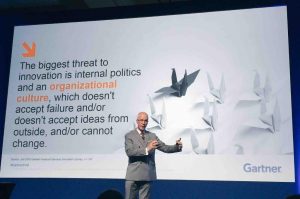
barrier to innovation & change

Image Gartner financial services innovation survey.

So, what’s the solution?

Shift from multi-channel to omni-channel, simple eh?

Ok so perhaps not that simple. We’ve found the best way to connect all the dots requires some sort of catalyst, a simple way to shift tac from one strategy to another. It starts with the brand. Very often traditional brand strategies haven’t been updated to incorporate digital and very often don’t consider 2-way, always-on channels. This means starting from a bad place that will never get your where you need to be.

From a communications perspective, we’ve found that developing a content platform or digital experience, driven by an updated brand strategy, is a great place to start. It connects the traditional above-the-line channels with digital and it’s then reasonably straightforward to re-align the channels around this. Importantly, it gives the disparate teams something to rally around.

The components:

Research and data

We look at trends, qualitative research and data covering four areas; brand, customers, competitors and landscape. This gives a complete overview enabling us to understand what the challenge is, where the opportunities lie and a deeper understanding of the customer.

Segment to build personas

However you slice up your customer research and data, your aim is to segment, creating smaller affinity groups. Once you have these you can develop personas, defining a picture of the person beyond the data. Adding substance like media choices, needs, passions and goals helps build up a fuller picture.

Customer journeys

Mapping these is vital. Data is an essential component, aim to understand which channels are relevant to each given persona. Importantly, the goal is to understand where the barriers exist, blocking the customer’s movement towards purchase and removing these. You can’t do this unless you know firstly what they are and secondly at what stage of the customers journey they come into play.

If you do this, you can confidently market holistically to the customer with tailored activity at each channel to move the customer towards purchase.

Again, an integrated content marketing approach is the perfect solution as it prioritises putting the right content in the right place to make this happen.

Creativity and technology

It’s hard to separate these now so maybe let’s talk about the idea. In an omni-channel world the idea that drives what you produce and what the consumer sees is channel agnostic. In an omni-channel world the digital experience is at the heart, with consistent messaging adapted for the nuances of each channel and relevant to the journey stage. Consistency is key. Think of a story, a big one, where you tell only the most relevant bits at a given time and place to satisfy the audience, motivating them to move onto the next chunk.

For DVO, this kind of conceptual creative is found at the intersection of traditional communications, editorial and technology-led thinking.

Activation

Activation in an omni-channel world requires meticulous planning and organisation. We’ve experimented with various formats, arriving at a universal content plan as the most simple and effective, layering this above the channels to manage implementation. In practice, we’ve ended up doing some of the channel work where the brand in question doesn’t have resource, but we’ve always found a big picture view keeps everyone involved engaged.

Improvement

Assigning the right objectives and channel KPIs is vital when moving away from multi-channel to omni. Channel KPIs move from being arbitrary to laddering up directly to marketing and business objectives within the omni-channel strategy. It’s vital you do this so you can measure the effectiveness of the whole. This represents another great opportunity to align teams, it gives them purpose outside of their daily activity, demonstrating how their input impacts on the wider objectives. It’s important they know this of course.

Conclusion

Contact button

So 2017 has been tagged as the year that brands start to optimise multi-channel, better integrating individual experiences around the whole. So, omni-channel then? In our opinion this change needs a catalyst, something real, that demands an omni-channel approach and integrated content marketing fits the bill.

We’ve thought long and hard to create simple road maps for our clients to get them on a path to realigning their marketing around the customer expereince. If you’re looking to transition from multi- to omni-channel and want the gap between your brand and customer to stop widening then contact us here, or give us a call, 020 3771 2641. You can also sign-up for our newsletter at the top of this post on the right hand side.

Digital marketing trends for 2017.

This week we’re looking at emerging digital marketing trends for 2017 and how they will impact your brand.

Happy new year to everyone. 2016 was a good, if sometimes challenging, first year for DVO. The London based full-service digital agency landscape is a competitive one! So for our first post of the year I wanted to talk about emerging digital marketing trends for 2017. Wholly inspired by Gartner’s 5 key emerging digital marketing trends.

In this post, we’ll look at:


  • Where has the purchase funnel gone?
  • Advocacy and loyalty
  • Big data, (come on we couldn’t leave it out)
  • Content Marketing
  • The experience

Suffice to say 2017 will be another year of flux as marketers evaluate new technology and marketing approaches, integrating where they can to take advantage. What’s still apparent to DVO is that the customer is 2, sometimes 3 or 4, steps ahead of most. Many brands are still playing catch-up with real pressure from sector disruptors and a consumer empowered like never before to deal with.

Where has the purchase funnel gone?

The old-style discrete, linear purchase funnel simply doesn’t exist anymore. Customers move at their own pace. Interacting when, where and how they want to across multiple channels. “83% of consumers are more likely to do business with brands that allow them to control where, when and how they interact.” CFI Group.

What does it mean for my brand?

This puts more emphasis on understanding the customer, their journey and potential interaction points. This is where the power of big data comes into play, using it intelligently to understand where a customer is but more importantly using it to move the customer to the next stage. It also means key emphasis should be placed on customers as individuals as each journey can be very different, a macro view of the customer serves little purpose on this basis. Customers as individuals will be a key-theme for 2017.

Advocacy and loyalty, UGC.

The balance of power has shifted to the customer; smart brands understand this and are actively looking at ways to nurture their best customers. Using those customers to tell the brands story.

What does it mean for my brand?

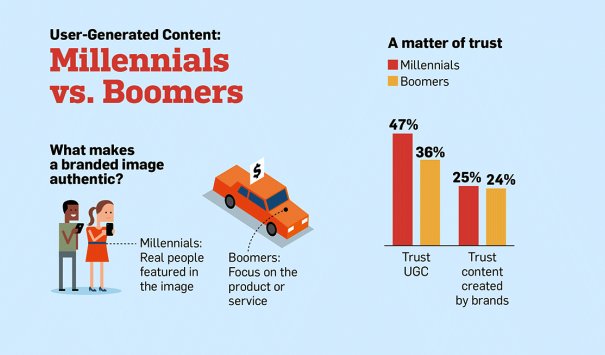
Customers are twice as likely to trust content created by other customers as opposed to brands. igraph-ugc-trust Graphic curtesy of Adweek, It doesn’t mean stop doing content marketing at all. What it does mean though is that brands should be looking at how they can create a framework to encourage those stories, curating them if you will. The right framework will allow you to capture the content and then extend the reach of the story. Focus on how you identify and nurture your best customers, giving them a platform to tell your story to a wider network than they would otherwise have done on their own. This is a key mind-set change from creator to curator. For an in-depth look at UGC strategy take a moment to download our latest white paper, here.

Big data.

No trends blog would be complete without a mention of big data. It’s big and it’s data! However it’s important especially as the purchase funnel has become far more complicated. Focusing efforts on capturing data across the customer journey and analysing it to understand and then implement activity at the right point in the right way is a sure win.

What does it mean for my brand?

You’ve probably got data coming in from all sorts of places, the emphasis here is on combining it and then using it to better understand the customer journey. As marketers our job is simple, to put the right message in the right place to move the customer towards purchase, simple. Not so simple when you’ve got loads of channels and a customer who doesn’t play by the rules anymore. In the short term using personas to map out the stages a customer moves through gives you a grounding to start to think about what you do next.

Content marketing.

This is a biggy, not just because content marketing is central to what we do. But, because Gartner says so. Actually, content marketing integrated across a multi-channel communications strategy is the most effective thing you can do to align yourself more closely with the customer. “For DVO 2017 will be the year of integrated content marketing.”

What does it mean for my brand?

If you do one thing in 2017 we recommend that you don’t look at content marketing as a sub-set of SEO. SEO is mega important but content marketing is a broader brand marketing strategy. At its heart it’s about building customer trust by anticipating customer needs at specific points in the customer journey. Have a strategy in place for content marketing, this makes it much easier to plan the various tactical activities that come after. This could simply be owning a space in the customers mind as your sectors expert. Or something else, after all it’s your strategy. Focus your efforts in 2017 around how you can integrate your content across your communications. We’d advise you think about a digital experience or a content hub as the nucleus and build your channels around it. Start simple break your content down into three areas:

  • Awareness, inspire, entertain, educate
  • Consideration, help evaluate the decision, be honest, NO smarmy sales
  • Conversion, UGC works great here

For an in-depth look at UGC strategy take a moment to download our latest white paper, here.


Contact button

The experience.

This has been on everyone’s agenda for a while and it’s a key digital marketing trends for 2017. This is a direct result of the discrete linear funnel no-longer existing. The customers’ perception of you and ultimately their decision to purchase is based on the sum of their interactions with your brand. Understanding this is vitally important.

What does it mean for my brand?

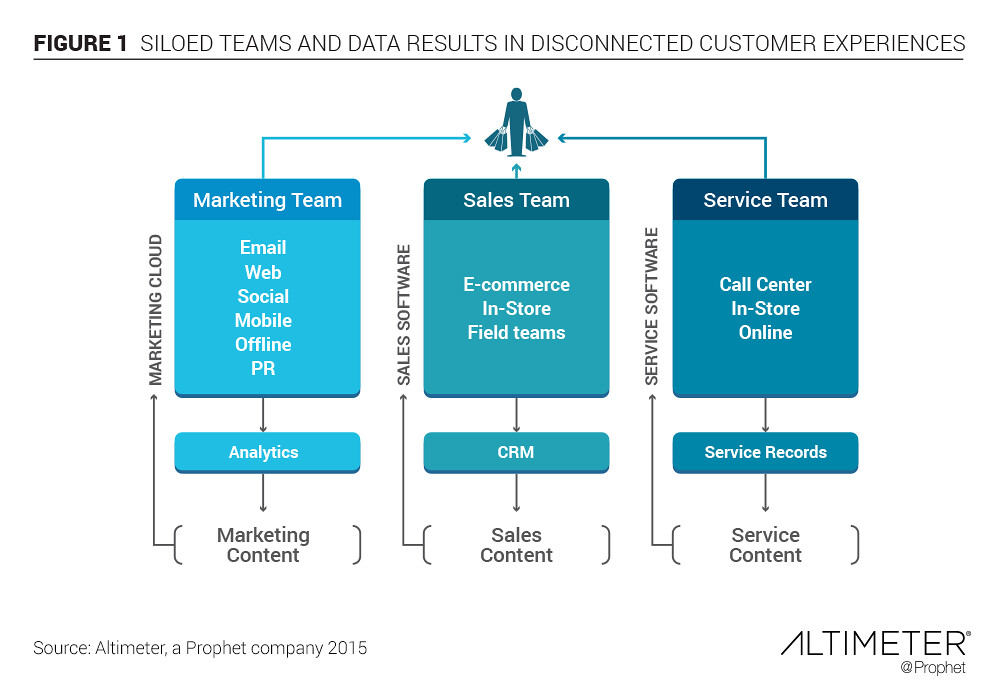
Once you have a start on the customer journey you can think about how each action you take at a specific point knits together. This means you need to be thinking integrated. Siloed structures work against a uniform customer experience. Siloed Data Causes Disconnected Experiences Even if you’re still very siloed, get everyone in a room once a month and get them talking about their specific activity. It will be very apparent, if you understand your customer journey, what fits and what doesn’t. This is a bigger shift than perhaps you want to make, so start small. You can test content centric campaigns with earned distribution simply and cheaply, if nothing else it gets teams working together. We wrote a post recently talking about integrated marketing with tips, theory and a case study that gives you a strong insight into the bits that matter. Read it, here. So that’s our digital marketing trends for 2017, it’s a lot to deal with. That’s why we’ve thought long and hard to create simple road maps for our clients to get them on a path to realigning their marketing around the customer. If you want the gap between your brand and customer to stop widening then contact us here, or give us a call, 0203 771 2641.

Why you need to embrace User Generated Content.

This week we take a look at User Generated Content (UGC) and why it should be squarely on your agenda for 2017.

It’s hard to escape user generated content marketing right now. Ignoring whether Content Marketing should actually be a secular discipline or not, there’s no denying the importance content is playing in most people’s plans and strategies today and for the year ahead and user generated content is where the smart players are operating.

We love content and have been producing rich, emotive, engaging content for our clients years before we became a full service digital agency and someone decided to give it a label. We’ve loved embracing each new level technology has taken content to, getting to the heart of it and how it can benefit our clients’ businesses.

Download our user generated content white paper

There’s a lot of buzz around User Generated Content (UGC) at the moment and rightly so. But many brands and even marketers are fearful of UGC and quite frankly, we believe this fear is totally unfounded.

What is UGC

So, let’s start at the beginning, what is UGC. Quite simply, it is content about a brand, company or business that is generated by users, rather than by the brand itself. This can take many forms from opinions and reviews, posts on social media, shared experiences via video and imagery to blog posts, comments and activation experiences.

Why it’s important?

The reason that UGC is causing such stir is the immense power it holds in building brand trust. Word of mouth has always been the most effective marketing tool in the box. Consumers will always trust third party opinions and recommendations above communications directly from a brand, even if the message itself is exactly the same. We are social beings, and being part of a community means sharing experiences and telling stories. It’s in our nature.

With the explosion of technology influencing every aspect of our day to day lives, our communities and story sharing has expanded to match. We can access thoughts and opinions from other people all over the world at the touch of a button. And this is where UGC really comes into its own. UGC supports, encourages and promotes the transformation of consumer from the status of passive audience into active user. Combined with social media platforms, consumers are perfectly placed to express themselves and share information like never before.

Why should brands embrace UGC?

Because UGC is essentially a conversation and if you’re not part of that conversation, how can you influence or benefit from it? Many brands and even seasoned marketing professionals are fearful of UGC, because they see it as losing control over their messaging. But as long as brands create the correct framework for the conversation to take place in, deal openly and honestly with their customers on the public stage and use the correct tools to move users through the experience, then this fear is unjustified. This means UGC needs to feature very early on in setting your marketing strategy and this framework and the tools employed are factored into all your channels and customer touchpoints.

Used correctly, UGC can relieve pressures put on time and budget limited marketing departments, becoming an almost automated content generator and customer communication network all in one.


Great UGC examples

Don’t just take our word for it, here are some examples of great UGC.

Diesel cam

Heineken

If you’d like to learn more about User Generated Content, download out white paper here, co-authored with UGC marketing strategy expert Gerhard Malojer, @GerhardMalojer.

We’d love to speak to you about user generated content, give us a call to chat through you thoughts, concerns and ideas on 020 3771 2461, catch us on twitter @DVOagency, or go oldskool and use our contact form here.


The importance of integrating data, insights and advice.

This week we’ve enlisted the help of some friends, Virtual Logistics, to give us the lowdown on why integrating data is so important.

As a full service digital agency we’re acutely conscious of the battle taking place at the moment and integrating data is the key to staying on top. Digital focused marketers are waking up to the realisation that cut-through can be achieved by a better understanding of the emotional needs of consumers coupled to the behavioural data gathered from multiple, often disparate sources. The winners will be those brands who can take these data sources and combine them together into an integrated, meaningful, view to sit alongside the emotional insight that will drive the creative, the idea.

Get this right and strike the balance between mind and heart and you’ll be in the minority and that’s where the real revenue is.

In this week’s post we’re looking at the data side of that equation. Supported by our friends at VL to help us discuss integrating data and its importance in the marketing ecosystem. VL have been helping businesses function more efficiently and effectively since 1994 through data integration services.

In this insight piece we will cover:

  • Why you should be integrating data?
  • Why a data integration strategy matters?
  • Data is the key to connected marketing?
  • Why a skilled partner is important?
  • Where are we heading?

The age of omni-channel commerce has hit business with a bang. Just a few years ago in North America, Cyber Monday was the new shopping holiday that mirrored Black Friday; this year, customers shopped online more than they did in-store. This isn’t a new story: consumers are both browsing and shopping across multiple channels (sometimes at the same time), and intercepting these users at the right time on the right channel with the right message has become a complex problem businesses and marketers are trying to solve.

What is new is how businesses are approaching this disconnect between how consumers browse and shop and how brands have set up their omni-channel customer experiences. Many approach the problem of omni-channel as an afterthought, adopting integration products and DIY programmers to fill immediate needs, only to have these decisions create larger problems down the road. Others approach this problem as an opportunity for competitive advantage.
The fact of the matter is that your business’ success is predicated on your customers’ experiences with your brand. And that experience is centred on how your business treats, manages, and automates your data. Consumers expect consistent experiences in all channels, and retailers and marketers must adopt new strategies and technologies like data integration as a service that make this possible.

Who is VL?

Since our start in 1994, VL has been focused on helping businesses function more efficiently and effectively. We do this through providing high quality data integration services as a partner in your business’ ongoing growth.
Our cloud-based omni-channel integration service VL OMNI is designed using VL’s central point of truth data integration methodology. VL OMNI will ensure that your business’ integration stays scalable and responsive with how your business changes and grows over time.

The basics

According to this joint report by Accenture & Forrester Research, many retailers are in a false state of omni-channel comfort. Many turn to data integration products or DIY coding to fill gaps where possible, but if your business is scaling or is already at a certain size these short-term solutions can end up doing far more harm than good. The reality is that consumer expectations are evolving much quicker than many businesses can keep up — especially when employing quick-fixes — ultimately putting brands dangerously behind.
Simply put, the quality of your business’ data integration strategy directly impacts the customer experience you’ll be able to provide at any and every touchpoint.

Why should you be integrating data?

With multiplying channels, your business now has potentially infinite touch points where you can collect data from your customers. Without integrating these channels, your business is creating islands of technology: applications where no data leaves and no external data is added from other applications.
To a business, this siloed approach is like watching a movie in 2D with one eye closed: you’ll understand some of the basic plot but you’re likely to miss the big picture. Integrating your applications and automating your data flows is moving into fully-immersed 3D Virtual Reality. And once you see that bigger, complete picture, you’ll wonder why you ever tried to understand your customers with only a partially complete picture.

Strategy is the key.

Your data integration strategy matters. Each comes with it’s own approach, systems, and processes for translating and automating your corporate data.
For small businesses just starting out with limited orders, integrating ‘to a piece of paper’ or manually moving data from application to application may be a good fit (a word of warning: these methods are rife with human error). But once your business starts to grow, you’ll need to move into automated solutions. A good intermediary step are plug-and-play integrations, many of which are bolted on to applications your business may already use. But even these product have their limits: once your business really takes off, you’ll need a highly skilled data integration service providing partner like VL.

Data as the basis for connected marketing.

If you truly want to understand your audience, your marketing team’s applications should be integrated together in order to compile the clearest picture of your audience. Summarized in new research done by the Data & Marketing Association (DMA) and the Winterberry Group:
“Better aggregation of data and deeper integration of marketing technologies are increasingly seen as principal solutions to marketers’ challenges in advancing effective omnichannel campaigns.” – Omni-Channel Shoppers: An Emerging Retail Reality
The most sophisticated businesses and marketers are gearing their strategies around conversion on any and all channels, catering to how consumers shop and expect to be treated. Without integrated data that is updated in real-time, it is near impossible to provide contextual, timely, and relevant information to your consumer base that may influence their decision to click and buy.

Why it’s important to work with a skilled partner?

“If you think it’s expensive to hire a professional, wait until you hire an amateur.” – Internet Unknown
As the premium data integration solutions and services provider, VL has the privilege of seeing what happens to businesses that approach data integration not as a priority but instead as an afterthought. And it can be summed up in a single word: chaos.
Plenty of applications, DIY programmers, and other solutions are happy to take your money and leave you with an incomplete or dysfunctional data integration. Others will let you set up a rat’s nest of ad-hoc integration products, which are usually courteous enough to fail at crucial moments (like when you have 10 000 orders queued up to be shipped to a big retailer). Having a skilled integration partner like VL on your side means that you have 100% support from a team of data integration experts.

Where next?

Data integration and automation is moving out of the realm of competitive advantage and into set expectation for both consumers and supply chain partners. Many applications your business may already use come with basic one-to-one integrations to popular applications, so there is very little reason to be moving data manually or trying to custom code a work-around internally. And if you require more complex integrations, seek out a trusted integration expert partner like VL.

For more information, check out the following resources:

Omni-Channel Shoppers: An Emerging Retail Reality (Think With Google)
A Look Inside Two Amazing Businesses: A Case Study Ebook on Data Integration, Back-End Technology Selection and Customer Experience
3 Common Ecommerce Integration Issues & Solutions: A Whitepaper on What Custom Data Integration Could Be Doing to Benefit Your Business
How Millennials are Revolutionizing Omni-Channel Retail, Forcing Businesses To Change (Video)

DVO prioritise all aspects of integrated communications, a structured data strategy is the building block on which all effective omni-channel marketing is built.

Contact us here if you’d like to talk about how you can drive success, underpinned by data, from your marketing.

Content marketing for 2017.

What’s in store for your content marketing strategy in 2017, what to look out for.

With 2017 just around the corner, we’ve been thinking about what’s in store for Content Marketing strategy? For us as a full service agency content marketing is the Ying to the campaign’s Yang. In any successful mix of activity they’re intrinsically linked. This week we’ll be highlighting where you should be looking for the year ahead and the areas you should be focussing.

Top 5 take homes

  • What’s your content marketing strategy and how does this link to your wider activity?
  • Factor in distribution and promotion early on in the process and don’t exclude paid channels
  • Think quality especially if your goals are to create awareness and drive consideration
  • Think about how your content activity can enhance and integrate with your wider campaigns
  • Is user generated content something you can leverage to extend your story?

Want to see more of these? Sign-up on the right, below for mobile users, for our insights newsletter.

So content marketing, what is it?

Hot on the heals of Mark Ritson’s article in marketing week that questions the validity of content marketing, arguing that it’s simply an unecessary name to describe activity that generalist marketers should already be doing, we thought we would give our definition for clarity.

“Content marketing is a marketing strategy that leverages connected consumer behaviour. A sub-set of communications it emphasises the creation and distribution of content that meets consumer needs, building trust, to attract and retain customers.”

Why is it effective?

It’s simple really technology has empowered the consumer. This has made it harder to win and build consumer trust. Strategies that leverage this get more cut through.

Should it be on my agenda?

If your objective is to sell more then a strategy that builds consumer trust and works to move consumers through the lifecycle, is a bit of a no brainer.

Where are we heading in 2017.

Strategy will be one of the key drivers in 2017, whether that is aligning content marketing strategy to a wider brand marketing strategy or as part of an integrated campaign, extending the lifecycle and its effectiveness. A concise strategy that can be easily articulated and understood and should be the cornerstone of good content marketing. A simple step is to start aligning content output to different stages in the customer journey.

Distribution and promotion should be factored in from the start. Much like all campaigns content needs to be seen by consumers to do what it is intended to do. Spending time creating content that meets consumer needs and then not putting it in front of those consumers is simply a waste of time and money. You wouldn’t build a campaign and then not promote it?

Quality over quantity will be driven by promotion. As brands wake up to the realisation that there’s huge noise online the focus will be on cut through. The shift will be when brands recognise that users’ needs trump those of search engines. When this happens the focus will be on quality content that excites and engages the consumer. This doesn’t mean there isn’t room for content that is SEO led, brands should be looking to structure their content around the customer journey; awareness, consideration and conversion.

Integration will be key in 2017. The ability to tell a connected story across numerous channels should be a key area of focus. The consumer is channel agnostic these days, our recent post on integrated marketing covers this in more depth (read more here). How you use content will influence how you extend the lifecycle of your integrated campaigns.

User generated content is and should be high on your agenda. Stories are best told when they are retold and sometimes your consumer has a better story than your brand. We’ve seen this happen on a small scale and brands like Coca Cola have implemented this effectively on a large scale.

Content marketing strategy case study

Here’s a case study for a DVO content marketing project we undertook for a private bank. Click to read.

kb-onsite-content

Get in touch to discuss how we can help

If you are trapped in a tactical silo and want to get more strategic with content marketing to achieve real results we can help. We’ve got some simple techniques we can use to get you on the right path and get your content working harder. Contact us, or give us a call, 020 3771 2641.

Can Native Ads Offer Newspapers a Lifeline?

This week we’re discussing native ads, is this the lifeline the press needs to arrest the ongoing decline in revenue?

The native ad market is growing at an exponential pace, blurring the lines between editorial and advertising. As a full service digital agency we use native ads to promote content, driving the reach we need to engage the right audiences.

Newspapers online

Santa’s big day is looming large and to marketers (and social media) that means Christmas promotions and the launch of the big retailers’ Christmas ads. Whether you’re a fan of Buster the Boxer, Kevin the Carrot or Waitrose’s Robin, there’s plenty of multi-million pound Christmas cheer to enjoy this year.

Buster the Boxer

Buster was not happy with socks AGAIN!

But spend any time on social media at the moment, and it’s hard to miss another side of the Christmas advertising coin. Without going into the politics of 2016, I think we can all agree it’s been a tumultuous year and certain aspects of society, both positive and negative, have seen substantially more light of day than before.  Who or what is responsible for the shift that’s happening is not for discussion here, but the Stop Funding Hate campaign provides an interesting perspective on the responsibility (or lack of?) that big money advertisers have for supporting allegedly divisive newspapers by providing them with advertising funds. Add to this the rise in usage of adblocking technologies and the nose dive in revenue from more traditional digital advertising streams and you’ve got an industry looking at a high level of disruption and probably feeling rather shell-shocked.

So what, if anything, is the answer?

While it may not be a panacea, the emergence of native advertising in recent years has provided significant revenue streams, calming the nerves of executives and journalists anxious about the future. But is it enough?Continue reading

Integrated marketing, for 2017.

With 2017 just around the corner, as the client side marketing voice at DVO, I want to bang the drum for integrated marketing. We’re in peak planning season so it’s the perfect time to make sure integrated marketing is firmly on your agenda, we’re full service it’s always on ours.

Whether it’s referred to as multi-channel, omni-channel or some other term [insert buzzword] yet to be coined, integrated marketing is a hot topic. From the outside looking in it seems to me the amount of talk vs. the amount of implementation is very unbalanced, so this week I thought I’d offer up some insights and practical solutions around integrated campaigns.

What is integrated marketing?

Put very simply, integrated marketing is taking a strong centralised concept and communicating it across multiple channels in a coherent and consistent manner. Obviously, it’s not quite that straightforward. If it were, you wouldn’t find so many people professing to be experts in the field and endless ‘how to’ guides on the subject matter.

Why should I be thinking integrated?

Because it’s how your customer behaves, that’s why. Consumer choice has never been wider. Your most powerful tool in winning customers is your brand experience and, put simply, this is the sum of a consumers interactions with your brand across all the channels they have access to. With myriad channels available, the amount of communication touchpoints can be hard to get a handle on. But handle it you must. Key to effective integrated marketing is understanding exactly who your customers are and how they behave. Putting the time and effort into mapping out (in as much detail as possible) the customer journey will never be time wasted. We see a large amount of isolated tactical activity taking place and then trying to be shoehorned back into some kind of strategy. We see this A LOT. And we can tell you, it does not work, it will be expensive and require a huge amount of effort for very little return. Much better to start with an overarching plan that takes the customer journey into account, which will help you plan and manage your channels.

You can’t escape the fact that today’s consumer is digital. It’s how people communicate with each other, how they shop, where they get their information from and even where they socialise. So brands need to fully embrace this. That being said, we’re not advocating jumping on board with every single digital channel out there. By taking the time to understand your audience’s needs and wants as well as their behaviour, you can develop a strategy that optimises the channels that are relevant to your business and focus on these. Far better to do a few things well than do everything badly. If your customer doesn’t want to interact with your brand via mobile app, then don’t build one just because everyone else seems to be doing it.
If you’ve got a good brand strategy in place, then a lot of this work should already be in hand and should feed into your marketing strategy. If you’ve not, have a read of this post for some useful advice and then give us a call.

Having a clear, concise brand should unify a business, which is essentially what integrated marketing is all about. Do the research, understand the audience, set objectives, measure and refine. Simple really.

Integrated vs. content marketing.

We see a lot of conversation playing integrated marketing off against content marketing and inbound strategies, and we’re not really sure why. It’s just another way to keep the silo mentality going. In our opinion, they are not mutually exclusive. Good content marketing should play a role in integrated marketing communications. Yes, content and content marketing is a real hot topic right now, but it does not work effectively as a standalone function. After all, what’s the point of having great content if no one gets to see it? That’s where pulling in the right channels to communicate your messaging comes into play. Make that content work for you, be it at a campaign level or higher up the chain.

Tips for getting integrated marketing right?

(Our news letter sign-up is on the right of this article if you want to receive more tips in your inbox)

Your brand and your business are unique to you. Your combination of people, products, services, customers and processes cannot be replicated. As such, there is no hard and fast rules on the ‘right’ way to implement integrated marketing and make it work. But we like to be helpful, so here are a few hints and tips on what works.

  • As we’ve mentioned, do your homework. We cannot stress enough how decent planning and research is vital in putting together any kind of marketing strategy. Know yourself and understand your customer.
  • Understand your channels. We appreciate that you can’t necessarily become an expert in every single channel, function, process and platform. No one can. But try and arm yourself with some basic knowledge of how they work, how they’re used, and most importantly, how they can be analysed.
  • Know what success looks like. Too often we see the moving of the proverbial goalposts, or, even more worrying, no set objectives, KPIs or performance reporting. You’d be amazed at how much activity rolls out day after day and never actually gets analysed. If you don’t know what you’re trying to achieve, how can you be sure the activity, and likely costs associated, are worth it?
  • Get geeky. Marketing is not about restaurant launches, celebrity endorsements and freebies. It’s about spreadsheets, it’s about lists, it’s being ridiculous organised, meticulous and analytical. Go granular, it’s the only way to ensure integration across your activity really works. Make a plan, refine it, refer to it constantly. And make sure everyone else involved is working to that same plan. The devil is in the detail, so lay it all out.
  • Listen. We often forget that marketing is a two-way conversation, it’s not just us telling the world how wonderful something is. It’s listening to your customers, engaging, responding and refining what you’re doing based on that feedback. With digital channels, this conversation happens in lots of places. Make sure you’re a part of it.
  • Content is key. Be interesting, be relevant, be pro-active. Make your content work hard for you. Ensure what you’re producing works across all the relevant channels, otherwise you’re going to run yourself ragged trying to cover them all off with different content.
    Make your content engaging. If you’ve taken the time to get to know your target customer (have we mentioned how important this is?) then you should have a clear idea of what they want in terms of content. What will excite them and elicit a response? Be creative. Stand out.
  • Analyse as much as you can. Even if it’s just basic analytics of your website, your social media channels or your email blasts. Do it. There are great tools available to help you, the free ones are fine. Use them. Know where people are coming from, what they’re doing, how they’re interacting. No channel is an island, understanding how your customer moves from one to another is integral to truly integrated marketing.
  • Don’t be scared of trying something new. Digital channels are great for testing new ideas and activations. And often very cheap to produce for. Video is becoming huge; Facebook has now overtaken YouTube for desktop views. That’s a lot of people watching a heck of a lot of videos. Although it’s probably mostly me getting lost watching Tasty cooking videos for hours on end. We’re huge fans of using video and it makes up a large part of the work we do for clients. It’s engaging, effective and is easily transferable across a large number of channels, so it can be highly cost effective.
  • A useful model to use when it comes to integrated marketing is Pickton and Broderick’s 4Cs; Coherence, Consistency, Continuity and Complementary. Can you apply these across your integrated marketing activity? If no, go back and tweak it.

An integrated marketing case study.

We blended different communications strategies around a digital experience for Hayes & Jarvis to highlight them as a provider of standalone trips to New York, something they wanted to sell more of.

The simple premise at the heart was that most people only scratch the surface of New York, treading a well-worn tourist path. New York has so much more to offer.

Here’s a breakdown of the campaign into the cornerstones of a good integrated campaign.

Coherence: all the communications highlighted something unique and interesting about New York, sourced specifically from on the ground experts. The app at the heart was based around curated shopping trips in New York. Communications were digitally based covering paid, earned, and owned channels.

Consistency: all the communications adhered to the central premise and drove the user to onsite content and the app download.

Continuity: the nature of the onsite and app content allowed for ongoing content additions that could then form the basis of tactical campaigns to highlight them.

Complementary: the cross-platform interactions were heavily influenced by consumer need at the different touch points. This allowed the campaign to grow and reach a wider audience through social media.

Result, more holidays sold to New York.

If you are trapped in a silo and want to get integrated but aren’t sure how we’d love to help. We’ve got some simple techniques we can use to set you down an integrated path and get your communications working harder. Contact us here, or give us a call, 0203 771 2641.